
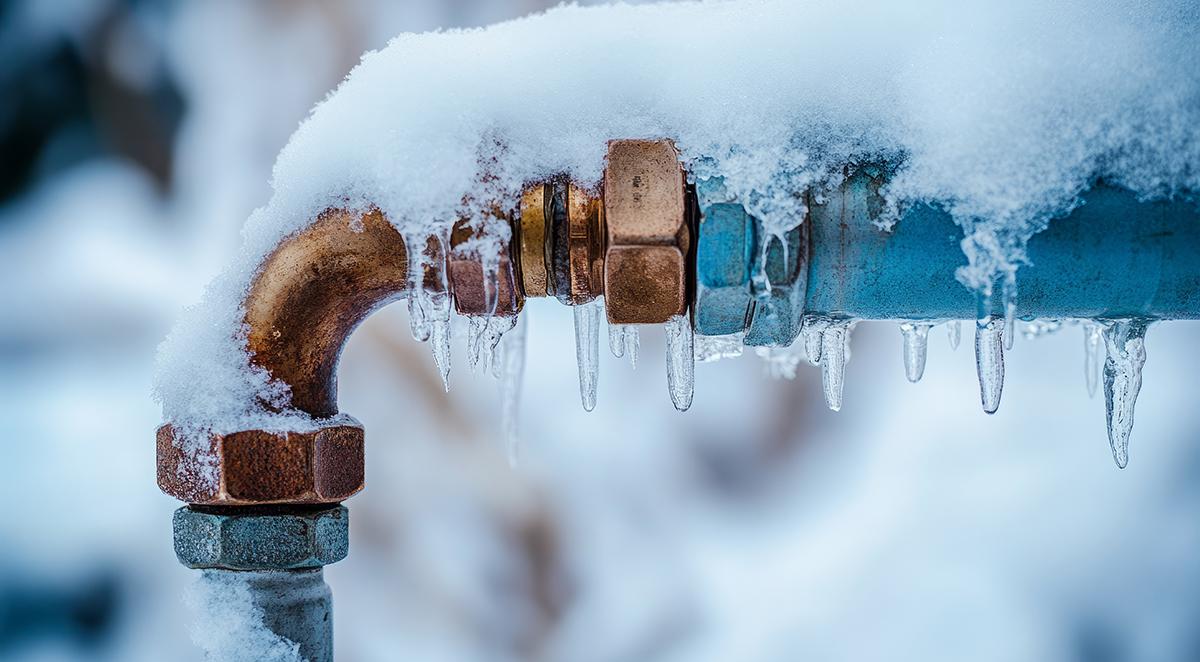
Winter in the mountains does not arrive on a schedule. A week of mild afternoons in the fifties can switch to an overnight low in the teens without much warning, and the pipes running through your crawl space are the first part of your home to notice. By the time most homeowners think about winter plumbing, the cold has already found the weak spot.
The good news is that nearly everything that goes wrong in December can be prevented in October. A few hours of preparation now protects the parts of your plumbing system that are hardest to reach and most expensive to repair. Here is how to get your home ready before the first hard freeze, and what to watch for once the temperature drops.
Quick Summary
- Drain and disconnect every outdoor hose and spigot before the first freeze
- Insulate exposed pipes in crawl spaces, garages, basements, and exterior walls
- Seal crawl space vents and air leaks that funnel cold air onto your pipes
- Locate and label your main water shut-off valve while conditions are calm
- Flush and inspect your water heater before it faces peak winter demand
- Address slow drains, small leaks, and running toilets now rather than in January
- Keep interior temperatures steady, even in rooms and areas you rarely use
Why Western North Carolina Winters Are Hard on Plumbing
Our region does not get the sustained, deep cold that plumbing in the upper Midwest is built to withstand. What we get instead is arguably harder on a home: repeated swings across the freezing mark, sometimes several times in a single week. That pattern is uniquely destructive to pipes and fittings.
Elevation and the freeze-thaw cycle
Hendersonville, Asheville, and Brevard all sit above two thousand feet, and the surrounding ridges and coves climb well beyond that. Elevation changes of a few hundred feet can mean a difference of several degrees on a cold night, which is why one neighborhood freezes while another a mile away does not. If your home sits on a north-facing slope or in a cove that holds cold air, you are operating in a colder microclimate than the regional forecast suggests.
Each freeze-thaw cycle stresses joints, solder, and fittings a little more. Water expands by roughly nine percent as it freezes, and that expansion has to go somewhere, which is why a pipe that survived five winters can fail in the sixth.
Older homes and unconditioned crawl spaces
A large share of housing across Henderson, Buncombe, and Transylvania counties predates modern insulation standards. Many of these homes sit on open or vented crawl spaces with supply lines running through unconditioned air, sometimes with no insulation at all. In a 1960s ranch or a renovated farmhouse, the pipe under the kitchen sink may be separated from outside air by nothing more than a subfloor and a vent screen.
Mountain homes also tend to have long horizontal runs reaching additions, outbuildings, and hillside foundations. Every extra foot of pipe in unheated space is another opportunity for a freeze.
Your Fall Plumbing Checklist
Work through these tasks before nighttime lows start reaching the twenties, which in our area often means late October or early November.
Disconnect and drain outdoor spigots and hoses
A garden hose left attached is one of the most common causes of a burst pipe. Water trapped in the hose freezes, and the ice pushes back into the spigot and the pipe behind it, often inside the wall where you cannot see the damage until spring.
Disconnect every hose, drain it completely, and store it out of the weather. Then open the spigot to let any remaining water out, and add an insulated faucet cover. If you have a frost-free spigot, remember that it only performs as designed when nothing is attached to it.
Insulate vulnerable pipes
Foam pipe sleeves from any hardware store handle most of this work. Focus on pipes in crawl spaces, unheated basements, garages, attics, and any run along an exterior wall. Pay particular attention to the pipes farthest from your water heater, since they carry the coldest water and sit at the end of the line.
For pipes in genuinely exposed locations, heat tape adds an active layer of protection. Follow manufacturer instructions closely, plug it into a properly rated outlet, and never layer it over itself.
Seal crawl space vents and air leaks
Insulation slows heat loss, but moving air defeats it. A crawl space vent open to a north wind will freeze an insulated pipe faster than still air will freeze a bare one. Close or block foundation vents for the season, and seal gaps where pipes and wiring pass through the rim joist.
While you are down there, look for signs of trouble you may not have noticed: standing water, mineral staining, corrosion on fittings, or insulation that has fallen away.
Know where your main water shut-off is
Everyone in your household who is old enough should know where the main shut-off valve is and how to operate it. In most homes it sits where the supply line enters the house, often in a crawl space, basement, or utility closet. Homes on well systems will also have a shut-off near the pressure tank.
Test the valve now to confirm it actually closes. Older gate valves seize with age, and finding that out during an active leak is the worst possible timing. If yours will not turn or does not fully stop the flow, it is worth replacing before winter.
Water Heater Prep Before the Cold Sets In
Your water heater works harder in winter than at any other time of year. Incoming water arrives colder, so the unit runs longer to reach the same temperature, and household demand climbs with longer showers and more hot water use.
Flush the tank to clear sediment, which accumulates faster on well systems and reduces both capacity and efficiency. Test the temperature and pressure relief valve, check the connections and the drain pan for signs of moisture, and confirm the thermostat is set around 120 degrees. Our homeowner's guide to water heater maintenance walks through each of these steps in detail.
If your unit is a decade or more old, or if you have noticed rumbling, discolored water, or shorter hot showers, have it evaluated before peak season. Replacing a water heater on your own timeline is far less disruptive than replacing one during a cold snap.
What to Do During a Hard Freeze
When a forecast calls for lows in the teens or a prolonged stretch below freezing, take a few additional steps. Open the cabinet doors under kitchen and bathroom sinks so warm room air can reach the supply lines, especially on sinks against exterior walls. Keep your thermostat at a consistent temperature day and night rather than setting it back in the evening, and leave unused rooms heated with the doors open. For extended trips, never turn the heat completely off, and consider shutting off the water supply and draining the lines.
If a faucet produces only a trickle during a freeze, treat that as a warning. Something upstream is already partially frozen, and acting quickly gives you a chance to thaw it before it splits. Our guide on how to prevent frozen pipes covers safe thawing methods and what to do if a pipe has already burst.
Signs You Need a Plumber Before Winter, Not During It
If you notice any of the following, get it addressed while the weather still cooperates:
- Slow or gurgling drains, which suggest a partial blockage that colder grease will worsen
- Any visible drip, dampness, or mineral staining around pipes and fittings
- Low water pressure at one or more fixtures
- A toilet that runs, rocks, or takes multiple flushes
- A water heater older than ten years, or one making unfamiliar noises
- Exposed pipe in a crawl space with no insulation or with insulation that has fallen away
Our team handles leaking pipes and pre-winter inspections across Henderson, Buncombe, and Transylvania counties, and fall is genuinely the easiest time to fit that work in.
Frequently Asked Questions
When should I winterize plumbing in Western North Carolina?
Aim to finish outdoor tasks by the end of October and interior preparation by mid-November. Our first hard freezes often arrive earlier at higher elevations, so if you live above three thousand feet or on a north-facing slope, move that timeline up by a couple of weeks.
How cold does it have to get before pipes freeze?
Pipes in unheated spaces are generally at risk once outside temperatures drop to around 20 degrees, though duration, wind exposure, and insulation matter just as much. A brief dip to 25 degrees rarely causes damage, while a windy night at 20 degrees can freeze an exposed pipe in a vented crawl space in hours.
Should I leave my faucets dripping all winter?
No. Dripping faucets are a targeted measure for nights when temperatures are expected to fall well below freezing, not a season-long practice. Leaving them open continuously wastes a great deal of water without adding protection on mild nights.
Do I need to insulate pipes if my crawl space is enclosed?
In most cases, yes. An enclosed crawl space is warmer than a vented one, but it is still unconditioned space and can drop below freezing during a sustained cold stretch. Insulating supply lines is worthwhile regardless of foundation type.
Can I winterize my plumbing myself, or should I hire a plumber?
Hoses, faucet covers, foam sleeves, and cabinet doors are straightforward do-it-yourself tasks. Water heater service, shut-off valve replacement, repairs to existing leaks, and insulating hard-to-reach runs are better handled by a licensed plumber. Our post on when to hire a plumber for your DIY project offers a useful dividing line.
Get Your Plumbing Winter-Ready
Winter plumbing failures are rarely random. They happen in the places we cannot see, in the spaces we do not heat, to the components we have not checked in years. Preparation works because it addresses those vulnerabilities before the weather tests them.
If you would rather have a licensed plumber walk your system and handle the parts that are hard to reach, we are glad to help. Plumbing Solutions has served homeowners and businesses across Henderson, Buncombe, and Transylvania counties since 2018, and our owner has been plumbing in these mountains since 2000. We offer emergency service during regular business hours, and we would much rather see you in October than on the coldest night of the year.
Contact us to schedule your pre-winter plumbing service or request a free estimate.